Book Review: “The Glass Hotel” by Emily St. John Mandel

Cover: "The Glass Hotel" by Emily St. John Mandel. Shows a tree-laden island in the midst of sea and sky.

With “The Glass Hotel,” Emily St. John Mandel offers another beautiful story of connection and loss.

Like “Station Eleven,” this book introduces us to several separate narratives, gradually revealing the weave binding them together. The novel opens with an impressionistic sequence of a woman tumbling into the ocean before pausing with more substantial sections: a young man with a drug problem, a remote hotel, a trophy marriage.

Gradually, we realize, we’re being introduced to a crime of some kind, a fraud stemming from “the kingdom of money” that ruins many lives and, belatedly, places most of its conspirators in jail. But Mandel is really more interested in community, or the lack thereof, as revealed most starkly by the oblivious rich and the “shadow country” of desperate people living on the margins after the 2008 financial crash. 

The author does an excellent job crafting her cast, making them memorable and rich in characterization. Most of the principals are aware of being on the outside, walled off by addiction, wealth, poverty, crime, prison, age and art. They chronicle these shortcomings, but they don’t wallow in them, and the result is absorbingly human.

I did feel the book cheated a little by deploying ghosts into the narrative, tangible beings that facilitate some connections and resolutions that couldn’t have happened otherwise. But I was moved by the outcomes, finding the novel a rewarding experience.

My Favorite Albums of 2025

Grammy night means it’s time to share my favorite albums from 2025! Most of them came out well before this year, because I’m old, but hopefully you’ll find something worth giving a shot. It’s always appreciated when you share your favorites with me too.

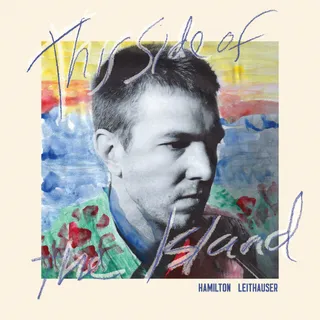
Album Cover: Hamilton Leithauser, This Side of the Island, showing an illustrated picture of the singer.

Hamilton Leithauser, This Side of the Island (Rock) Almost a Bowie-style rock deconstruction to start on “Fist of Flowers” and “Burn the Boats.” It’s playful, but I prefer the more straight-ahead drive of “Knockin’ Heart” and the title track.

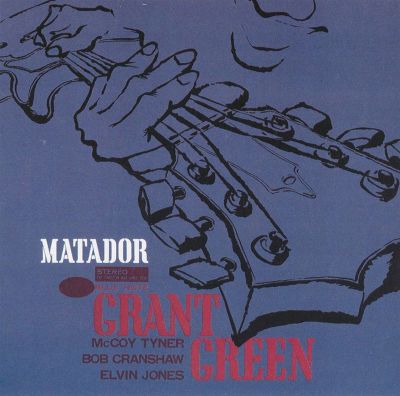
Album cover, Grant Green, Matador. Shows a closeup illustration of hands playing guitar.

Grant Green, Matador (Jazz) Loose and lively to open. Excellent ensemble balance, with dense drum fills and an easy, exploratory strut on guitar. The guitar work on “My Favorite Things” has a bit of a Jerry Garcia vibe. “Bedouin” is a great groove.

Album cover, Snocaps, Snocaps. Features a woman playing a drum kit.

Snocaps, Snocaps (Rock) Compelling tracks in the space between rock and country. Warm and welcoming–I love Katie Crutchfield’s voice. Almost has a Sheryl Crow vibe to open on “Coast.”

Album cover: Mbongwana Star, from Kinshasa. Shows a person in a deep-sea diver suit.

Mbongwana Star, From Kinshasa (World) Light, fluid grooves. Vibrant and creative–nice materials to get your head bobbing. The arrangements and instrumentation are great.

Album cover, Father John Misty, Mahashmashana. Weird black-and-white drawings of creatures

Father John Misty, Mahashmashana (Rock) I like his sound: smart but not afraid of rhythm. The vocals and arrangements are delightfully smooth, disguising the bitterness of his words.

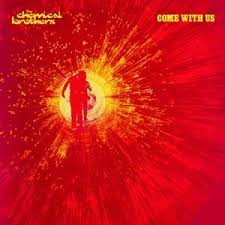
Album cover: The Chemical Brothers, Come with Us. A person in the middle of an orange flare.

The Chemical Brothers, Come with Us (Electronic) Energetic, with a nice variety, “Come with Us” has a great bounce all the way through the flight that powers “The Test.” Only “The State We’re In” gets the record stuck in the mud.

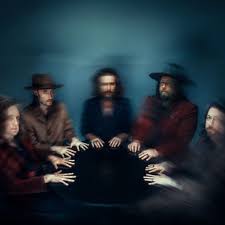
Cover: My Morning Jacket, Is. Features a world, seance style cover of the band.

My Morning Jacket, Is (Rock) Mellow but catchy. “Time Waited” is solid, and “Half a Lifetime” is a nice track too. I like how their sound feels different, in a good way, from a lot of what’s popular now. Sort of a beautiful fundamentals approach.

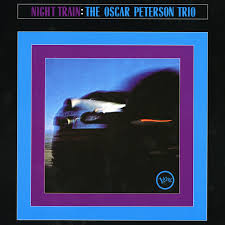
Cover: Oscar Peterson, Night Train. Features a picture of a train in motion.

Oscar Peterson, Night Train (Jazz) The trio is perfectly balanced, with the rhythm players offering an easy foundation for Peterson’s glimmering runs. “Georgia on My Mind” is a beautiful jam, and the group is jaunty and assured on “Honey Dripper.”

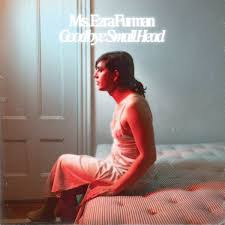
Cover:  Ezra Furman, Goodbye Small Head. Shows the singer sitting on a stripped bed.

Ezra Furman, Goodbye Small Head (Rock) Lean and focused, the record adds some off-kilter pop production to kick things off on “Grand Mal.” “Jump Out” is a highlight. Furman has honed her voice and vibe, and the results remain impressive.

Cover: Vieux Farka Toure, Fondo. Shows the singer carrying a guitar on a sand dune.

Vieux Farka Toure, Fondo (World) Otherwordly, reverb-drenched Malian-style guitar wizardry. Lightning runs accentuate richly crafted songs.

Cover: Pulp, More. Shows a rocky, red landscape with blue sky above.

Pulp, More (Rock) Sounds more like a Jarvis solo record to me than a Pulp album–I miss the bombast in the arrangements. That said, “Grown Ups” is a solid track, and “Farmers Market” builds to a heartfelt cry of “Ain’t it time we start living?” An engaging return, it’s no “Different Class.”

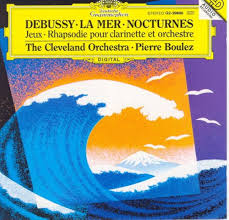
Cover: Debussy, La Mer, Noctures, Jeux. The Cleveland Orchestra. Shows a painting of a blue wave.

Claude Debussy, Jeux (Classical) Atmospheric and free-flowing. A pastoral mood movement. The pieces that often accompany it on recordings (Noturnes, La Mer) are great as well.

Cover: Clickbait, At Your Leisure. Shows women in alien garb shooting bolts out of a television.

Clickbait, At Your Leisure (Rock) Nice angular rock in a sparer Devo/Pylon vein. Peppy and propulsive. Got to see them live at the Grindhouse in Highland!

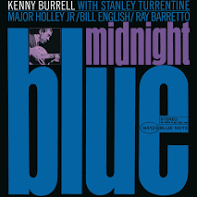
Cover: Kenny Burrell, Midnight Blue. Mostly type with a small image of a man playing guitar.

Kenny Burrell, Midnight Blue (Jazz) Kicks off with an assured cool jazz vibe on “Chitlins Con Carne,” with patient leads from the title guitarist and smooth sax by Stanley Turrentine. “Mule” has a perfect, slow blues groove.

Cover: The Mall, Time Vehicle Earth. Illustration of intricate purple and black space scene.

The Mall, Time Vehicle Earth (Electronic) Synth rock with anthem-style vocals filtered through plenty of reverb and delay. Half party track, half pastiche. The vocals were lower in the mix, and the bass higher live, which was great. Another Grindhouse show.

Cover: Phosphorescent, The Full Moon Project. Shows the singer on a beach in front of a moon.

Phosphorescent, The Full Moon Project (Rock) I love the conversational timbre of his vocals. The arrangements are good too–spare and simple but full nonetheless. “Homecoming” is a top track. Even the spare “Like a Rolling Stone” is worthy. “Corpus Christi Bay” is another highlight.

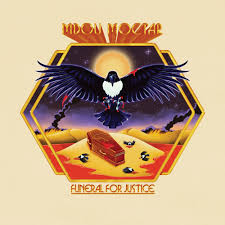
Cover: Mdou Moctar, Funeral For Justice. Shows an illustration of an eagle flying over the dessert with a visible coffin at center

Mdou Moctar, Funeral For Justice (World) Great lead-guitar heavy music with a driving backing band. “Sousoume Tamacheq” has some serious Death-style grooves. The title track blisters too–great riffs and rhythms.

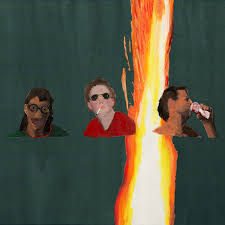
Cover: MJ Lenderman, Manning Fireworks. Features paintings of three men and a bolt of fire.

MJ Lenderman, Manning Fireworks (Rock) I like the low-key, literary, down-home guitar sound. Has a bit of a Beck or Conor Oberst feel (when they’re in home-studio mode). “She’s Leaving You” is an unpretentious jam.

Cover: Daddy Yankee, Prestige. Computerized portrait of singer and text.

Daddy Yankee, Prestige (World) High-energy production and sound. “Limbo” has a “Gasolina” style burn. Impressive how it stays lively over its hour run-time. Great synths throughout–strong pop riffs and countermelodies.

Cover:  Wax Fang, La La Land. Picture of baby with crown, earrings, googly eyes illustrated over it.

Wax Fang, La La Land (Rock) Sort of a theatrical, Colin Meloy vibe to open on “Majestic.” I like it. There’s a Queen feel to some of the arrangements. The guitar sound is unique and catchy.

Cover: Hank Mobley, Workout. Shows photo of man smoking a cigarette by his saxophone.

Hank Mobley, Workout (Jazz) The title track offers quicksilver jazz with electric guitar on lead. “Uh Huh” has beautiful saxophone work. A strong collection.

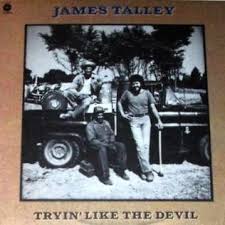
Cover: James Talley, Tryin’ Like the Devil. Shows three men sitting by an old truck

James Talley, Tryin’ Like the Devil (Country) Solid home-style country from a working-class perspective. Assured and polished but perhaps a bit on-the-nose. “Give My Love to Marie” has a sweet lilt. His voice is a little square for me but the collection is strong.

Cover: Tom Petty, Highway Companion . Shows an astronaut leading a little monkey by hand back to a rocket.

Tom Petty, Highway Companion (Rock) “Square One” is a sweet song. It’s a good late solo collection, but it doesn’t have the tenderness of “Wildflowers.” The record is understated, but a nice, mature offering.

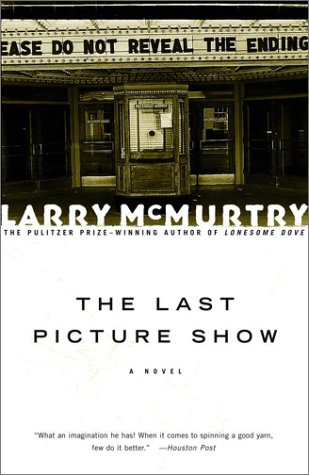
Book Review: “The Last Picture Show” by Larry McMurty

Cover: Larry McMurty, The Last Picture Show. Includes a picture of an old movie theater marquee with "Please do not reveal the ending" in marquee letters.

Crafted with a plainspoken power, “The Last Picture Show” is a moving coming-of-age story in mid-century nowhere Texas.

Based in the fading oil town of Thalia, the book introduces us to two friends, Sonny and Duane, as the pair head into their senior year of high school. Living together in a boarding house due to complicated family histories, the two teens haunt the pool hall, hang at the late-night diner and work long hours at hard-labor jobs. 

They also look for romance, although Duane is further along that trajectory due to being in the backfield on the football team. He’s dating Jacy, a convertible-driving cutie whose parents are the richest folks in Thalia. Sonny has a crush on her too, while Jacy has her eyes on a fast-moving Wichita set. 

It’s thus that Larry McMurty launches us on a year of growth and humor, loss and uncertain milestones. Thalia is a sexier place than I anticipated. There are back-door visits and steamy truck cabs and long, frustrated negotiations about what’s “too far” for high-school sweethearts. (There’s also a disturbing scene with some high-school boys and a blind heifer that I dearly hope McMurty invented. “Thank goodness I didn’t live in this time or place,” was a common thought reading the book.)

The love affairs seem amped up for effect, but the limitations of the characters’ lives feel fully realized. McMurty’s characters are earthy and real; the plainspoken dialogue is true and deeply revealing. 

Sonny and Duane do their best to exceed the constraints of the town and humble backgrounds. But they’re so acclimated to the mire created by narrow-minded bullies like their Coach Popper that they don’t realize how deep they’re sunk into it.

There are heroes too, like Sam the Lion, who manages the pool hall and the titular movie theater, but they seem outnumbered and outgunned. Sonny in particular seems made for better things than what Thalia has to offer, but there’s little indication he’ll find it. 

In part, this book reminded me of Cormac McCarthy’s “The Passenger.” They both carry a similar sense of loss, chronicling adventures that turn out to be elegies, even if there are some high times along the way.

Favorite Books of 2025

I love seeing everyone’s year-end reading lists, and I was also fortunate to read some great books in 2025! Here are some of my favorites:

Book cover: Vera, or Faith by Gary Shteyngart, with an illustration of a girl's head warping to her feet in concentric circles.

“Vera, or Faith” by Gary Shtengyart

A near-future novel, this book nails the feeling of living in the present with humor and grace. Our title character is a precocious 10-year-old who’s struggling to figure out status and socializing while the world around her is low-key falling apart. An examination of family, politics, society and more, it’s short and nails the ending.

See My Full Review

Book cover: The Piano Lesson by August Wilson. Includes outsider-art style painting of two people at a piano with a larger man in a suit looming overhead.

“The Piano Lesson” by August Wilson

A short play anchored in ghosts, it explores the difficult line between honoring our family pasts and casting them off to build better futures. The characters and dialogue are excellent, and it avoids settling into easy answers.

Cover: The Bean Trees by Barbara Kingsolver. Shows an illustration of crops growing in a field

“The Bean Trees” by Barbara Kingsolver

A beautiful early novel about a young woman who heads out west and picks up a foundling baby on the way. Settling in Tucson, Arizona, she discovers herself and a deeper understanding of family in the network she creates. Set in the 80s, the book engages topics we continue to grapple with today and is anchored with easy writing in a memorable voice.

Cover: Motherland, a Jamaican Cookbook by Melissa Thompson. Features a cover of illustrated overlapping leaves.

“Motherland: A Jamaican Cookbook” by Melissa Thompson

I picked this up looking to expand my vegetarian palette and loved the blend of family stories and tasty recipes. The coco wheat buns are great, and I have enjoyed many a pigeon-pea stew here.

Cover Hirayasumi volume one by Keigo Shinzo. It shows an illustration of two young people doing calesthenics outside a Japanese-style house

“Hirayasumi” by Keigo Shinzo

This manga series set in Tokyo follows a 20-something slacker living with his art-student cousin. It’s warm and humane, with excellent art and gentle storytelling that reminds me of classic Archie Double Digests (but better).

Cover of The Heart in Winter by Kevin Barry. We see a flat painting of a large heart, with the top left corner being taken up by a setting sun and a small illustration of a man and woman on horseback.

“The Heart in Winter” by Kevin Barry

Funny and vulgar, this Western-era novel introduces us to a star-crossed pair of Irish immigrants who fall hard for one another and end up trying to make a run from Montana to California. The characters and voice are memorable, even if Tom and Polly seem driven to self-destruction.

See My Full Review

Cover: E.C. Segar's Popeye: Well Blow Me Down. Features an illustration of Olive Oyl being surprised by a blaring phonograph

“Popeye” by E.C. Segar

This classic comic-strip collection is bustling with life, as Popeye trades punches and malapropisms with anyone who crosses his path. Absurdly funny, it’s a wild read.

Book cover: Ann Patchett, State of WOnder. With an elaborate filigreed border and a dragonfly illustration.

“State of Wonder” by Ann Patchett

This novel finds a strait-laced researcher setting off into the Amazon rainforest in search of a presumed-dead colleague. It’s often contrived, but it’s also heartfelt and memorable.

Cover: Prince Valiant Vol. 9, 1953-1954 by Hal Foster. We see Valiant fighting another knight in armor.

“Prince Valiant” by Hal Foster

Even 12 volumes in, this series continues to pair exquisite art with lively action and knowing dialogue. It’s nowhere near as square as Val’s haircut makes it look.

Book Review: “Vera, or Faith” by Gary Shteyngart

The cover of Gary Shteyngart's "Vera, or Faith," showing a simple illustration of a girl rendered in colorful circular lines.

Funny and heartbreaking, “Vera, or Faith,” continues author Gary Shtenyngart’s streak of reflecting our present into an unsettling near future.

Set in New York not too far down the line, this book centers on the precocious 10-year-old in the title. Vera is smart but struggling with social cues and a high-stress home life.

Her dad, Igor (a sort-of Shtenyngart stand-in) is immature, drinks too much and is fixated on selling the magazine he runs to a “Rhodesian billionaire.” Igor’s marriage with Vera’s step-mom, Anne, is rocky. A “trad wife,” as Igor claims, Anne is struggling trying to keep the household running: she has to care for Vera, a son with Igor, and her husband too. She comes off as well-meaning but perpetually frazzled as she tries to keep Igor in line and encourage Vera to recognize status and social cues.

On top of her family drama, Vera is tasked with a big debate project at school, and she’s also preoccupied with intimations that her real mom, who she doesn’t know, might be sick. Society seems sick too, and it’s here that Shteyngart is so skillful with the near-dystopian details.

There are protests in the streets. Women traveling through red states are subject to pregnancy tracking at “Cycle Through” stations. Much of the political debate, though, centers on a proposed “five-thirds” amendment, which aims to give five-thirds of a vote to (white) Americans who can trace their ancestry to the Revolutionary War era. It’s a world of oligarchs and bad-faith political debate and a familiar sense of everything falling apart in the stupidest way possible.

Through it all, Vera is our anchor. Smart, energetic and unfiltered, she’s poised beyond her years but is still just a kid, even given the seismic issues at home and in the world beyond. It would be easy to render her a phony little super genius, but Shteyngart’s take is compulsively readable.

“Vera, or Faith” is a brief, brisk book, full of reversals and twists. AI devices play a big role, but the book steps away from tropes here too, establishing the technology as ubiquitous and flawed, just another dumb thing we all have to learn how to live with. His characters are the same, following their own interior logic as the book builds to an impeccable ending, one that makes a clear statement on who, exactly, qualifies as American.